How Hotels and Destinations Are Discovering They’re Better Together
Every destination invests heavily in telling its story. Not every hotel tells it the same way.
Scott Oklin, CMO of Visit Anaheim, shared an example during a recent webinar that’s hard to forget. A brand strategist from New York was visiting Anaheim to help the destination sharpen its brand. One evening, she asked a hotel front desk employee what there was to do that night in Anaheim.
The response she received: “Nothing. Leave Anaheim.”
The employee wasn’t trying to undermine the destination. She simply didn’t have the information she needed at that moment. But the result was the same: a visitor left with a false impression of a city that had far more to offer.
And it’s happening in hotels across nearly every destination, every day.
Until recently, when a guest stepped into a hotel, the destination’s story often wasn’t present in that moment. If it isn’t available, something else fills the gap — a well-meaning staff member relying on memory, an outdated printout of restaurants and things to do, a general AI tool or Google search.
None of those necessarily reflect the destination’s priorities or its most current story.
That gap — and the opportunity to close it — was the focus of our recent webinar, “AI at the Point of Stay,” with Scott Oklin, Diane Charno, EVP of Marketing and Communications at Visit Myrtle Beach, and Leslie Inlow, Director of Marketing at The Landsby, a 51-room boutique hotel in Solvang, California.
A Moment That Has Largely Gone Unclaimed
The information gap can show up anywhere in the travel journey. It might happen at the hotel itself, when a guest asks a question and receives an incomplete answer. Or it can appear earlier, when someone is deciding where to stay.
Booking a hotel is one of the most considered decisions a traveler makes. Once that decision is made, something shifts. Excitement peaks. Inspiration turns into anticipation. They begin thinking about everything else they want to experience.
Diane described this as one of the most underutilized moments in the entire journey.
Historically, this moment has remained largely unclaimed. A traveler books a room, then leaves the hotel website to research the destination somewhere else — opening new tabs, cross-referencing reviews, piecing together an itinerary across a dozen sources.
The hotel loses visibility into the rest of the planning process. The destination may never be consulted at all. And the traveler ends up doing far more work than they expected.
AI is beginning to change that dynamic.
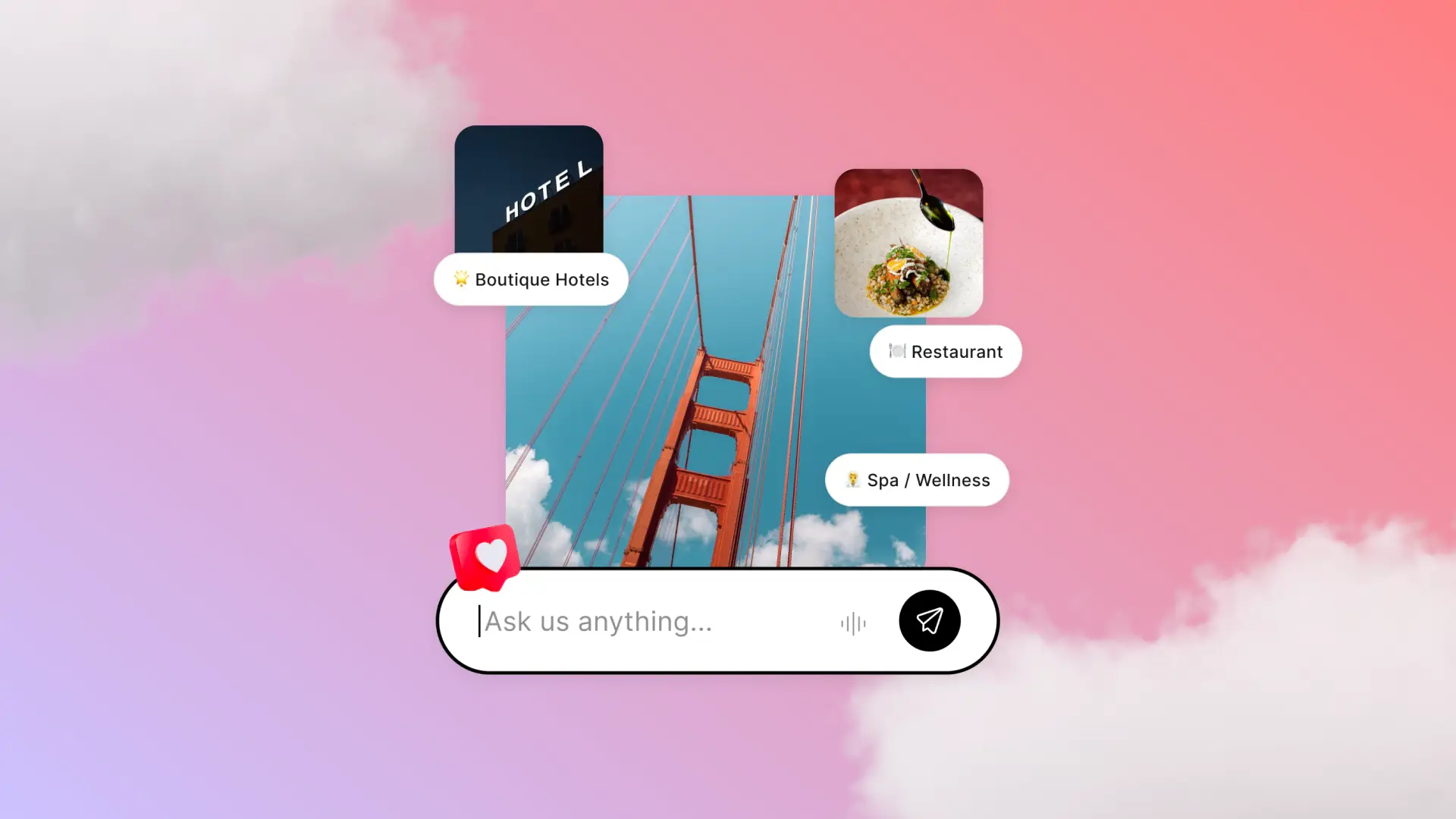
When AI shows up during the decision and booking process, it can keep the planning momentum going — answering questions about the neighborhood, surfacing things to do and helping a guest move from “I have a room” to “I have a plan” without leaving the hotel’s environment.
For destinations, that shift matters.
As Scott put it:
"
As a DMO, I don’t really care if they come to our site, as long as they’re booking the room. If the hotel can help replicate the message we’re trying to convey — how we’re positioning the destination, talking about it, what there is to do — that layer of consistency really matters to us.
Scott Oklin
CMO, Visit Anaheim
It’s a useful reminder. Destinations are not trying to pull every traveler back to their own website. What matters more is that the story of the place is being represented accurately wherever planning is happening.
For Visit Anaheim, that urgency is especially high right now. The city is in the middle of significant transformation — new development, new experiences, a destination evolving well beyond the landmark most people associate with it. When that story isn’t being told consistently at the hotel level, visitors may never see the full picture.
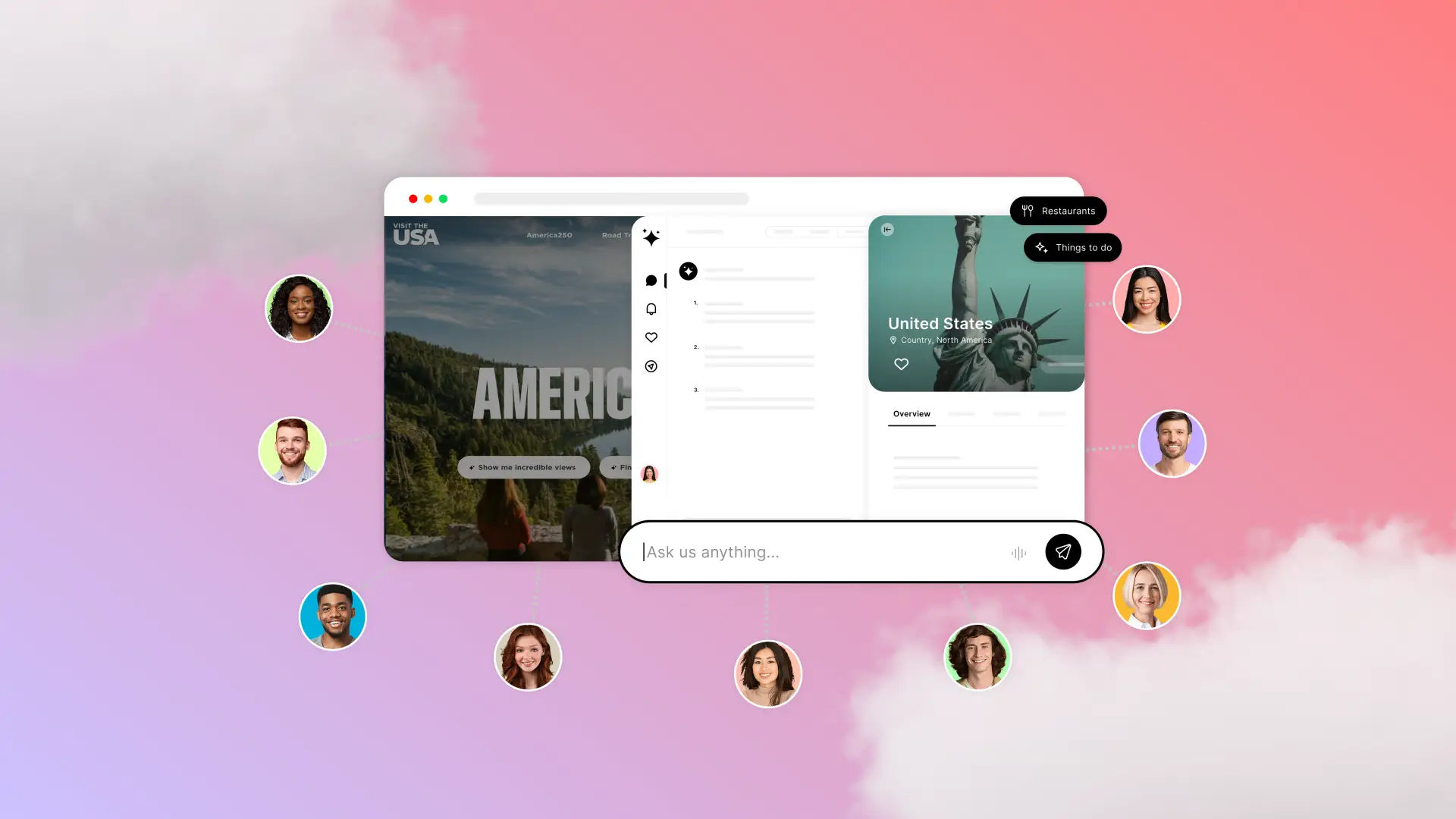
AI embedded on destination and hotel websites is starting to make that kind of coordination easier. It gives both sides a way to surface consistent, accurate information throughout the guest journey.
What Becomes Visible When Travelers Ask in Their Own Words
AI is not only telling the story. It’s also listening.
For years, the primary ways to understand visitor interests were surveys, web traffic patterns and aggregated analytics. Those signals are useful, but they rarely capture the full picture.
Travelers don’t ask AI questions the way they answer surveys. They ask the way they would ask someone they trust. And, for the first time, destinations and hotels can hear what travelers actually want in their own words.
A couple planning a romantic weekend. A family searching for pet-friendly properties. Someone preparing for a fishing trip and asking what to bring.
These signals come with a level of specificity that makes it possible to guide someone toward the right experience at the right moment.
Early results are beginning to reflect that shift. Diane shared that more than 40% of Visit Myrtle Beach’s AI engagements are leading directly to hotel booking referrals.
Beyond insights, the technology is also creating operational efficiency. At The Landsby, guests frequently ask simple property questions: whether the hotel is pet-friendly, if there is a pool, or when check-in begins. They want those answers immediately, whether it’s 2 p.m. or 2 a.m.
Within four to five months of launching, Leslie’s team saw a 33% year-over-year reduction in front desk phone calls. Staff could focus more time on the interactions that truly benefit from a human presence.
Together, those two outcomes — relevant answers and real-time availability — build something more valuable than either alone: trust. And over time, trust influences where planning turns into booking.
Guests who began by asking discovery questions about restaurants or things to do were returning later to ask about rooms and availability. The connection built earlier in the journey was shaping decisions later on.
Content Personalization, Beyond the Website
Destinations and hotels have spent years building curated content — restaurant lists, insider recommendations, “things to do” pages. AI does not replace that work. If anything, it makes it more usable.
Diane described a common traveler frustration: people are tired of reading the same top-10 lists everyone else uses. They aren’t necessarily looking for fewer options. They’re looking for the option that fits them. The restaurant that works for their group. The activity that fits their schedule. The experience that matches the type of trip they’re taking.
Personalization has always been the goal. AI simply makes it easier to deliver at scale.
Scott offered a simple example. A restaurant guide with 10 options is not particularly helpful if a visitor doesn’t eat seven of those cuisines. AI can take the same content and shape it around the individual — their preferences, their travel party and even what they feel like that evening.
That experience does not need to live only on a website.
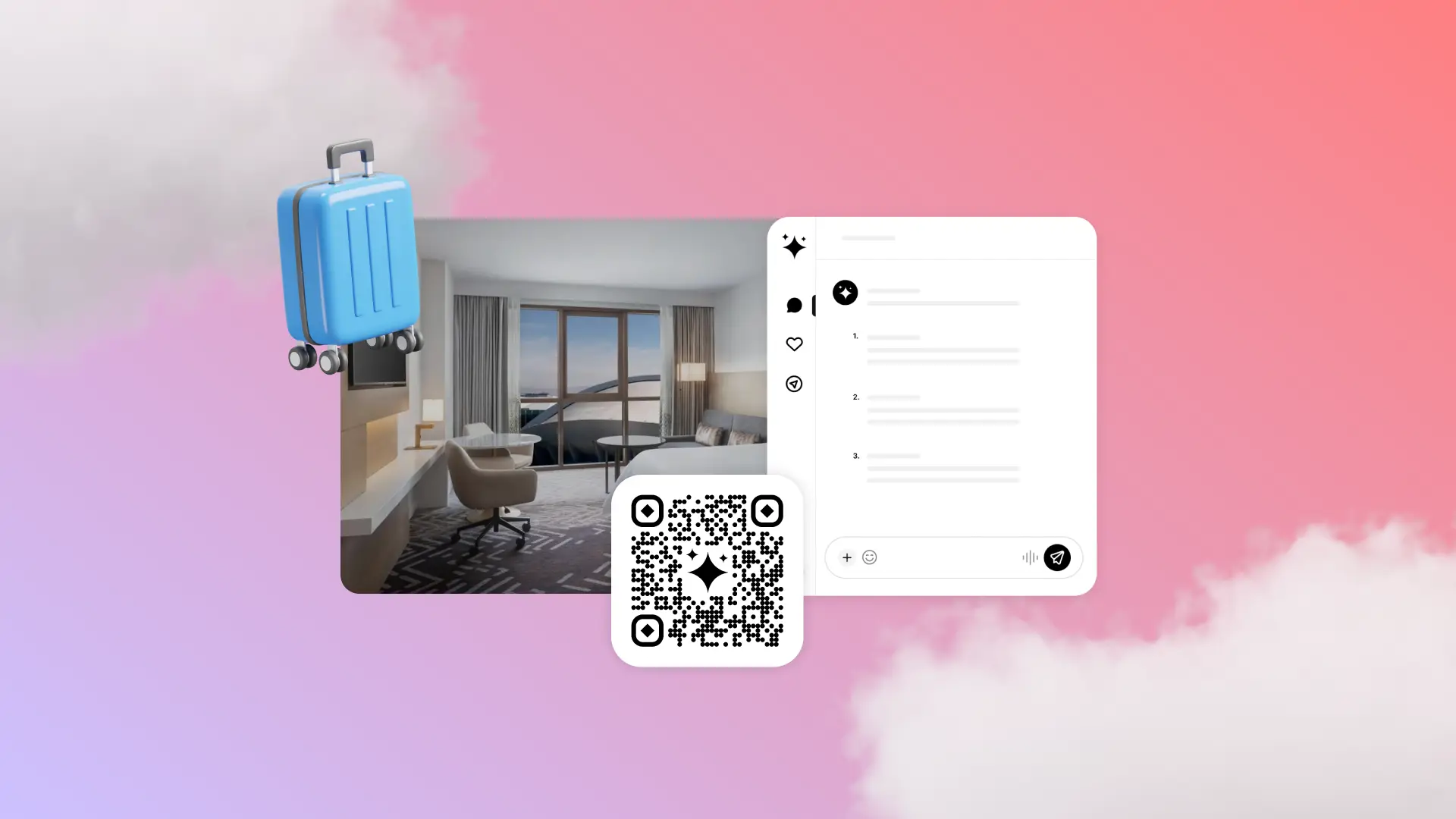
Scott described working with hotel partners to place QR codes in lobbies that surface restaurants within walking distance of that specific property, curated dynamically for whoever scans the code.
At The Landsby, Leslie’s team is experimenting with Mindtrip links inside their SMS check-in flow, so guests arrive with a personalized guide already in their pocket.
Even a Magic Link inside a social post or video can pull someone from inspiration directly into planning, meeting travelers where they are and making the transition from discovery to action a little easier.
A More Connected Future
When we asked panelists what a magic wand might enable, the answers came quickly.
Leslie talked about event discovery. Today, finding out what is happening across a region often means manually checking several destination websites. A shared, automated feed could simplify that process significantly for both hotels and destinations.
Scott described something broader: keeping the planning journey — from discovery through booking — within a connected experience so the traveler doesn’t have to click out to complete the trip.
Both ideas point to the same underlying opportunity: Better connection between the organizations that inspire travel and the ones that host it.
Imagine what that could look like in practice.
Hotels drawing from destination content to answer guest questions with the same accuracy and depth destinations have spent years building.
Destinations incorporating hotel insights to enrich their own planning tools.
Consistent storytelling across every touchpoint of the visitor journey.
That kind of shared foundation does more than improve the guest experience. It expands what destinations and hotels can accomplish together. The organizations exploring this now are beginning to build something that compounds over time — richer insight into traveler intent, stronger relationships with visitors and a more consistent presence throughout the planning process.
Travelers ultimately have one goal: a great trip.
They don’t particularly care whether the most helpful answer comes from the destination or the hotel. What matters is that someone shows up with the right information at the right moment.
Increasingly, that is the real opportunity here. Not simply adding another digital tool, but creating stronger continuity between the people inspiring travel and the places helping bring it to life.
Which raises a few questions worth considering.
Do you know how your destination is being represented at hotel properties today? When a guest asks for a recommendation — online or at the front desk — whose voice are they hearing?
For destinations willing to work more closely with hotel partners, that moment is becoming much more possible to shape.
Want to go deeper?
Watch the fuller webinar: AI at the Point of Stay or contact us directly: business@mindtrip.ai
TL;DR
Hotels and destinations are often disconnected at the moments that matter most — when a guest asks a question or, earlier, when a traveler is deciding where to stay and starting to plan.
AI is closing that gap, helping hotels surface accurate information about their property and the broader destination, providing visibility into traveler intent, and keeping the planning journey connected from discovery through arrival.
The organizations experimenting with this now are building something that benefits everyone: travelers get better answers, hotels build trust earlier, and destinations get consistent representation at the point of stay.