Lessons from California to DMOs Everywhere
AI isn’t a side project anymore. It’s quickly becoming core to how DMOs engage travelers — from extending trips to providing real-time updates and even surfacing new content ideas.
During a webinar earlier this year, I had the chance to hear how three California destinations are putting this into practice: See Monterey, Visit Truckee-Tahoe and Visit California. Their experiences reinforced something I believe strongly: AI is not just changing trip planning. It’s changing the role of DMOs themselves.
Here’s what I think their work reveals about where the industry is headed.
Personalization Extends Trips
Most travelers show up with a short list of must-do activities — two or three things they don’t want to miss. After that, they improvise.
That’s exactly where AI can step in. When I first met Rob O’Keefe, President & CEO at See Monterey, he told me about their simple but powerful goal: encouraging travelers to stay “one more night.” Now, with AI on the See Monterey website, he can bring that idea to life. As Rob explained during our webinar:
“With AI, we can answer very specific questions about those two or three things, and also plant other ideas they hadn’t thought of.”
I saw this play out on a recent trip to Santa Barbara. We had a place to stay and a few key things picked out, but not much else. The week before we left, I used Mindtrip to see what events might be happening. To my surprise and delight, the Santa Barbara Wine Festival was that weekend. I booked tickets and we had a blast!
That extra discovery extended our trip in a way I hadn’t planned. And it reflects the same philosophy Rob shared: personalization isn’t just filling gaps in an itinerary — it’s giving travelers the chance to create their own story.
Trust and Ethics Come First
The webinar underscored a theme I hear in every AI discussion: DMOs can’t afford to compromise trust. Travelers have to know the answers are accurate, or the whole experience breaks down.
Jackie Calvert, Director of Tourism Marketing & Management at Visit Truckee-Tahoe, captured it well:
"
Our number one goal was to preserve trust and authority. Once we understood we could index our own vetted content, that was the game changer.
That focus extends to how destinations monitor and review what AI produces. Answers need to be checked for accuracy, tone, inclusivity and bias before they reach travelers. In practice, that means creating systems to catch errors, spot gaps and make sure responses stay true to the destination’s brand voice.
Lynn Carpenter, SVP of Marketing at Visit California, pointed out that this also creates an opportunity: AI can help establish clear editorial guidelines that prioritize the traveler’s needs over commercial gain.
By combining curated, locally informed content with ongoing checks for quality, DMOs can use AI to deliver answers with confidence, ensuring both accuracy and alignment with their brand voice.
Real-Time Relevance Is Non-Negotiable
Travel is an in-the-moment experience. It doesn’t wait. Whether it’s wildfires in Los Angeles, Highway 1 closures or Monterey’s $100M Car Week, travelers need accurate, real-time guidance.
During the L.A. wildfires earlier this year, headlines suggested the entire city was shut down. That wasn’t true. Working together, we helped Visit California index its real-time travel alerts so visitors could see the reality: only 2% of the city was impacted, and nearly all tourism infrastructure remained available.
That’s the power of pairing proprietary DMO content with AI. It can provide clarity in moments of confusion — something no horizontal AI model can do.
See Monterey is using the same approach for Car Week, building a dedicated AI catalog to help visitors and residents navigate overlapping events and road closures. And in Truckee-Tahoe, AI is helping surface live updates for mountain conditions and sustainability guidance.
For me, these examples point to the same conclusion: real-time relevance is now table stakes. If you aren’t the one filling that gap, someone else will — and they may not get it right.
New Audiences, New Value
One of the surprises from this webinar was how broadly AI is being used across destination organizations. Its use goes beyond leisure travelers.
See Monterey saw early traction with meeting planners, who appreciated how quickly AI could surface details like venue capacities, nearby amenities and transportation options. Visit California’s sales team is using it to give travel advisors around the world immediate access to the information they need to sell the state more effectively.
What stands out is how these applications are extending inward organically. They’re becoming a resource for internal teams — helping them spot content gaps, identify emerging questions and shape smarter marketing strategies.
The bottom line: destinations are discovering that AI creates value both in how they engage travelers and in how they operate behind the scenes.
AI as Content Intelligence
What excites me most is how AI is reshaping editorial strategy. Instead of guessing what content to create, DMOs can now see exactly what travelers are asking for.
Truckee-Tahoe used this insight to adjust its content calendar, and Visit California is seeing the same trend with international and Spanish-speaking audiences.
This isn’t just about answering questions in the moment. It’s about learning which questions aren’t being answered well enough yet — and turning that intelligence into more relevant, useful content. That loop between conversation data and content creation is gold for DMOs.
AI and the Future of Search
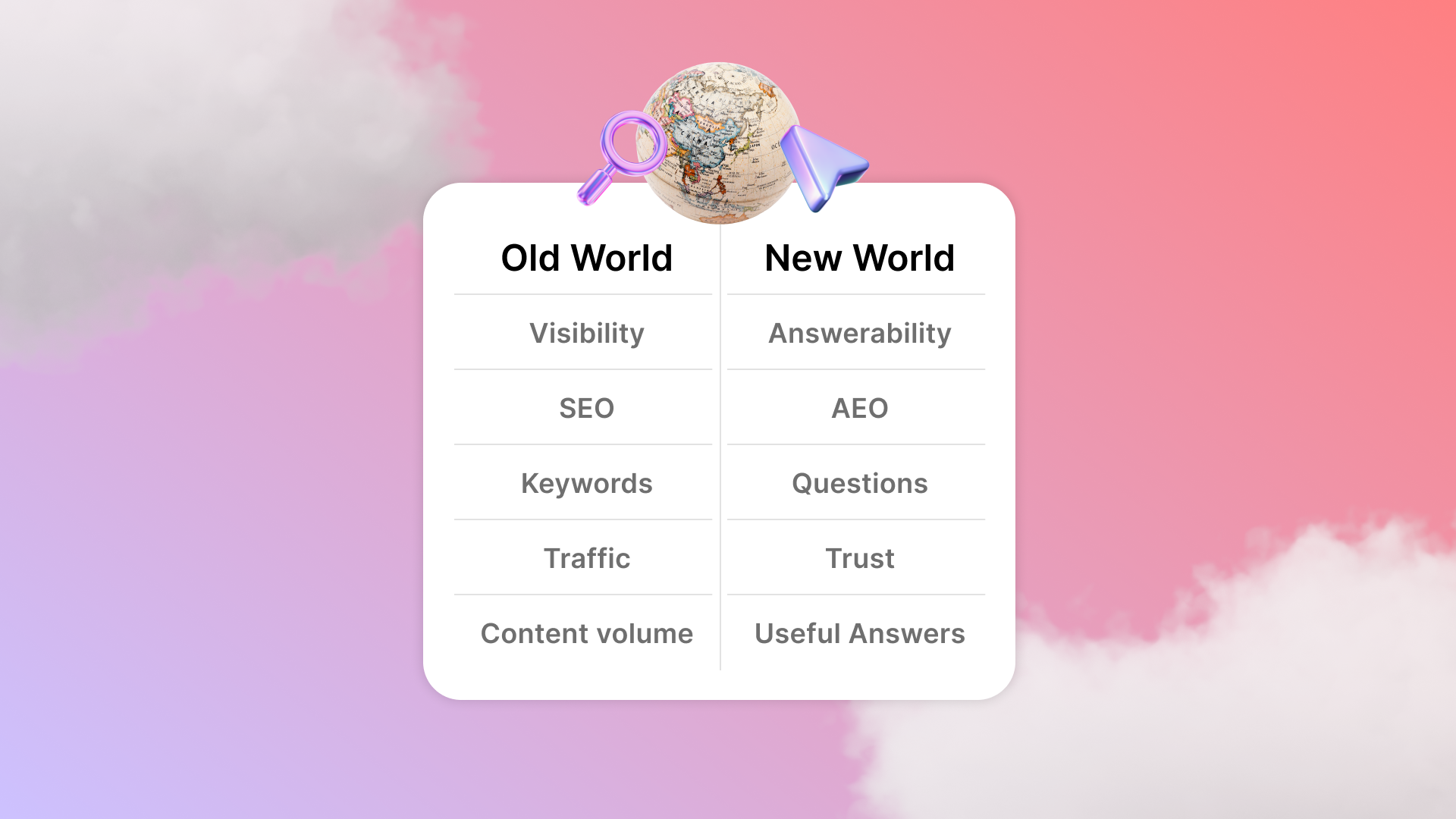
Search is changing fast. Jackie pointed out that it’s no longer just about keywords; it’s shifting toward more natural, question-based discovery. At the same time, platforms like TikTok and Instagram are becoming where inspiration begins, with travelers searching through short-form content for ideas.
That shift — from inspiration on social to deeper exploration — is where AI becomes the bridge between discovery and action. According to Expedia’s 2025 Traveler Value Index, 61% of travelers find trip ideas on social media. Social sparks interest, and AI enables destinations to catch that spark by guiding travelers from curiosity to concrete plans on their websites.
Mining these conversations uncovers the questions travelers are actually asking — many only answerable with local expertise. That intelligence not only fills content gaps today but also prepares destinations for the next wave of AI-driven search.
Visit California has approached this shift by layering AI on top of its strongest existing content, making it more dynamic and discoverable without disrupting what already works. For me, this captures the practical side: AI doesn’t replace proven content; it amplifies it, giving travelers ways to go deeper. And as Rob put it bluntly:
“You have to fight AI with AI.”
The takeaway? DMOs can’t just hope to show up in Google results. You need to make sure your curated, proprietary content is what powers these new conversational experiences.
Measuring What Matters
With new tools come new ways to measure success. Sessions and clicks still matter, but AI is giving destinations a more nuanced view of traveler behavior — not just who shows up, but how engaged they are and what actions they take.
- See Monterey: Engagement rate is up 20% year over year, with longer on-site sessions pointing to stronger trip-planning intent.
- Visit California: Travelers who use AI are spending 2.5x longer on the site and building itineraries that stretch 10–14 days.
- Visit Truckee-Tahoe: Partner handoffs and conversation ratings are becoming strong indicators of travel readiness.
Beyond these measures, destinations are also starting to track new signals of success: the sentiment of conversations, the frequency of partner mentions and the content gaps being filled through AI interactions.
Taken together, these metrics show that success is no longer just about traffic. It’s about the depth and quality of engagement — and whether those interactions are moving travelers closer to an actual visit.
Advice from DMOs to DMOs
When asked what advice they’d give peers, the panelists were refreshingly candid.
Rob stressed patience and persistence: “Take your time, get your arms around it and then be prepared to stay on it every day. The implementation is easy. Optimization takes time and focus.”
Lynn emphasized balance: “A measured approach makes this very doable. Right-size your risk and treat it like change management.”
Jackie encouraged empathy: “Dip your toe in. Use it yourself — even to plan a weekend trip. Developing that empathy loop can help you design a better experience for your audience.”
Their perspectives all point to the same truth: AI doesn’t have to feel overwhelming. Start small, experiment and commit to iteration. The destinations that treat AI as a living, evolving tool will see the greatest payoff.
Final Thoughts
California may have been the backdrop for this conversation, but the implications extend far beyond state lines. Every destination is facing the same set of traveler expectations: personalization, accuracy, trust and real-time relevance. Meeting those expectations will require more than static content and traditional search strategies — it calls for AI that can adapt, respond and guide.
The biggest takeaway is simple: AI isn’t just another feature to experiment with. It’s becoming the connective tissue between travelers and destinations, the link between inspiration and action. Those who lean in now aren’t just testing a new tool; they’re shaping the future of travel.