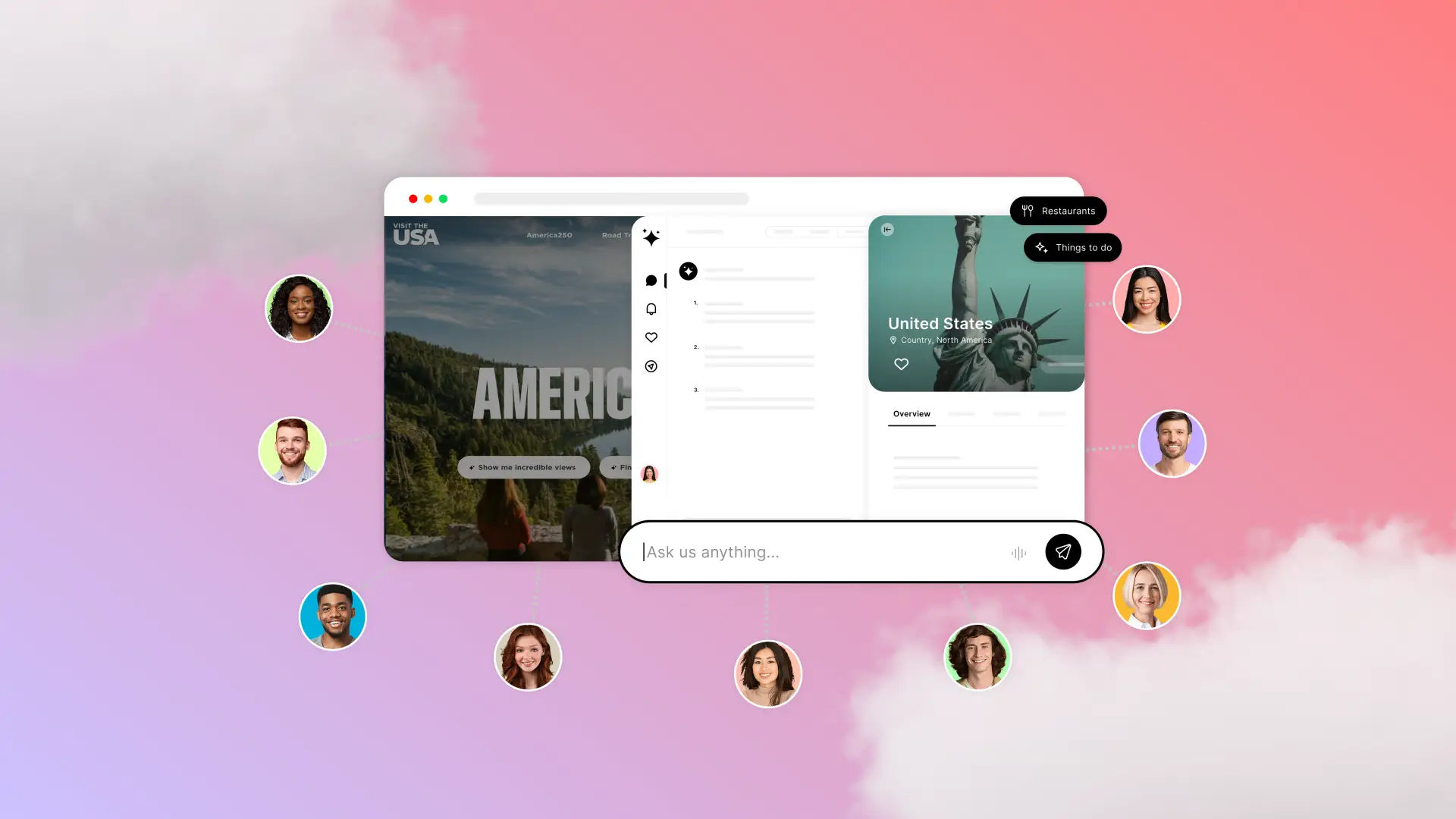
Lessons from Brand USA’s “America the Beautiful” Build
The way people plan trips has changed, and destination websites have not always kept pace.
For years, most DMO sites followed a familiar SEO playbook. Travelers searched for ideas, clicked through to official sites, and explored curated content built around what destinations believed visitors wanted to know.
That approach made sense when discovery was predictable and the path from inspiration to planning was relatively straightforward.
Today, that path looks very different.
People still arrive at destination websites, but they rarely arrive at the beginning. Many travelers now start planning by asking open-ended questions in AI-driven experiences or by watching travel content on platforms like TikTok, Instagram, or YouTube, long before they ever reach an official site.
Increasingly, travelers arrive not looking to browse, but looking to continue a conversation they have already started elsewhere.
That shift changes what destination websites are for.
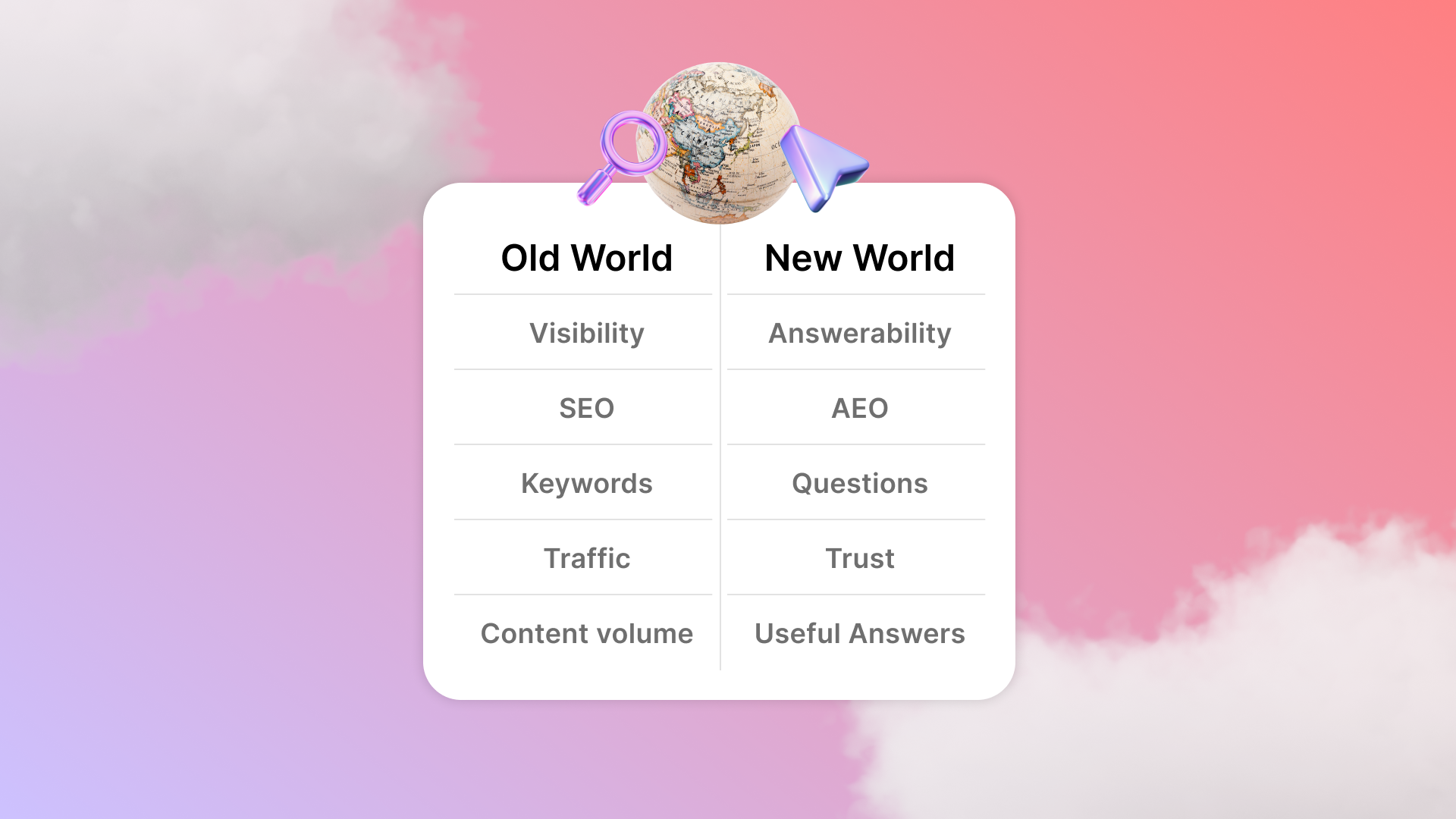
In this environment, success is no longer driven by publishing more content or optimizing for static keywords. It comes from deeply understanding traveler intent and responding to it in real time. The destinations that win will be the ones that listen best.
What Brand USA Built, and Why
These ideas were explored in depth during a webinar last year in which Brand USA and Miles Partnership shared how the “America the Beautiful” website came together and what they are learning from it. Janette Roush and Dan Rosenbaum from Brand USA, alongside Gray Lawry from Miles, discussed how the site was built and how travelers are using it.
What emerged was not just a story about a new website, but a clear signal of where destination websites are headed next.
Brand USA did not approach this as a traditional site rebuild. They approached it as a rethink of how people actually plan trips today.
Rather than treating AI as a feature added late in the process, it was designed as a core part of the experience from the beginning. The site responds dynamically to traveler curiosity, adapting based on what people ask instead of forcing them down predetermined paths.
That approach allowed the site to launch quickly, but speed was not the defining factor — alignment was.
From the outset, Brand USA and their technology partners shared a clear goal: Build an experience that reflects how travelers plan, not how destinations publish. Because the AI surfaces content in real time based on traveler input, the site did not need to be fully built out at launch. It was intentionally designed to grow as real traveler behavior revealed what mattered most.
During the webinar, Gray Lawry described the intent simply. The AI could not feel bolted onto the site. It needed to feel integral to the experience, guiding visitors from curiosity into action in a way that felt natural and cohesive.
That philosophy shows up clearly in how travelers engage with the site.
One example shared during the session involved a traveler from Italy planning a fourteen-day Texas road trip. Over the course of more than 46 messages, the conversation covered niche museums, themed lodging and even where to shop for Western gear. Travelers from markets like Japan and Brazil engage just as deeply, supported by built-in language detection that allows people to plan in their own language without Brand USA maintaining dozens of localized sites.
This is not passive browsing. It is active, intent-driven planning happening in the moment.
Measuring Intent, Not Just Traffic
As the site launched, Brand USA began to see early performance signals that reinforced the strategy.
Traditional metrics still matter, and the initial results were strong. Visitors who engaged with the AI stayed on the site nearly three times longer and bounced significantly less than those who did not.
More importantly, Brand USA layered in a new set of engagement metrics that better reflect how modern trip planning works. AI engagement rates ranged from six to eighteen percent depending on traffic source, compared to a typical three percent baseline. Message depth revealed long, substantive planning sessions rather than one-off interactions. Sentiment analysis and unique places mentioned provided insight into traveler mindset and intent. Referral conversions showed how often planning moved from conversation to action on local partner sites.
Brand USA also refined how engagement itself is defined. A visitor who clicks multiple calls to action in a session, or clicks once and initiates a conversation, signals far more intent than someone simply scrolling a page. When AI is woven throughout the experience, those moments matter.
Letting Travelers Lead What Comes Next
Behind the scenes, these conversations create something even more valuable.
Every traveler's question becomes insight: what people are trying to do, how specific their needs are, where content helps and where it falls short. Instead of guessing what to build next, Brand USA can see it directly in the language travelers use.
This represents a fundamental shift in content strategy.
The future of destination websites is not about pushing content destinations think travelers want. It is about publishing and prioritizing what destinations know travelers want, based on real questions asked in real time. Chat insights become the roadmap for what content gets created next and how it is framed.
This is where destination organizations have a unique advantage.
No one knows a place better than the destination itself. As traveler queries become more complex and more personal, destinations are uniquely positioned to answer with authority and context — especially when planning spans timing, budget, accessibility, interests, sustainability and group dynamics. AI does not replace that expertise. It amplifies it and delivers it when travelers are ready to act.
Listening closely also matters beyond the website.
As discovery continues to evolve and traditional search plays a different role, travelers increasingly arrive with expectations shaped elsewhere. Destinations that understand traveler intent at a granular level are better positioned wherever their destination appears. Insights gathered on the website help inform broader content strategy, digital campaigns and how destinations remain visible and relevant as planning behavior changes.
The website becomes more than a publishing platform. It becomes the connective tissue between inspiration and action.
Trust and control were foundational to Brand USA’s approach. The experience draws from Brand USA-approved content, verified points of interest and live data partnerships like Google Maps, TripAdvisor and OpenTable. Behind-the-scenes logic helps ensure responses are balanced and helpful. Weekly red-teaming keeps the experience accurate, on-brand and trustworthy.
When asked what she would tell other destinations considering a similar path, Janette Roush emphasized the importance of getting started rather than waiting for perfection. Understanding how this technology works comes from using it, not observing from the sidelines.
Brand USA did not aim to build a perfect site. They chose curiosity.
They built a site that listens, learns and evolves alongside traveler behavior. One that complements human expertise rather than competing with it.
That is the future of destination websites: better listening, not louder publishing — and experiences designed for how travelers plan today, not how they used to.